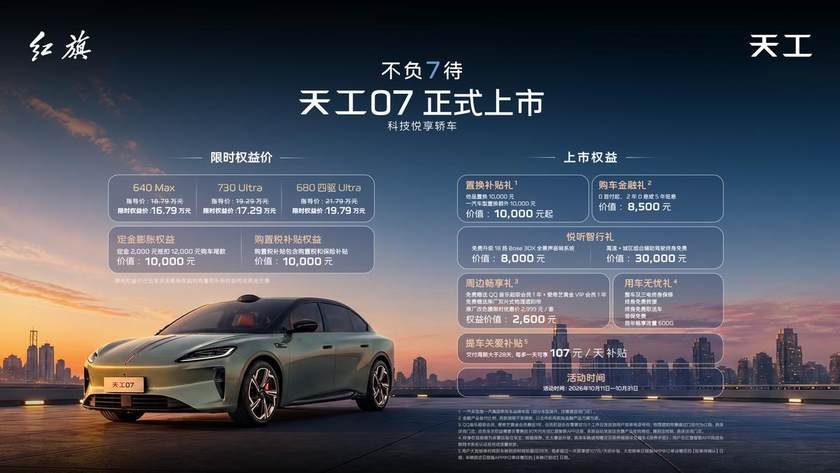
Preface: The Hongqi Tiangong 07 has officially launched. Limited-time benefit price of 16.79-19.79 ten-thousand yuan, three models, positioned as a mid-to-large pure electric sedan, with a maximum range of 730 km. To be honest, when I saw this price, my first reaction was—Hongqi is really anxious this time, but it is anxious in a good way.
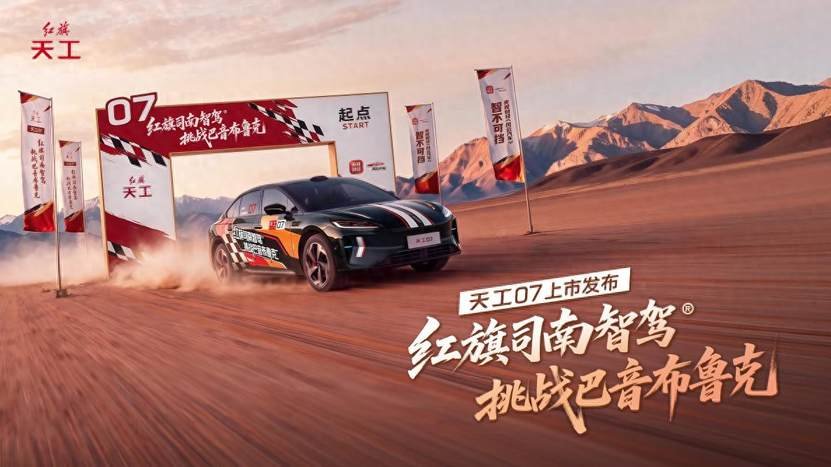
Spending 16.79 ten-thousand yuan to buy a mid-to-large pure electric sedan with a length of 5 meters and a wheelbase of 3 meters was something unimaginable two years ago. The Tiangong 07's direct competitors are locked onto the BYD Han EV, Xiaomi SU7, and XPeng P7i, but its entry price is more than 50,000 yuan lower than the Xiaomi SU7 standard version, and nearly 20,000 yuan cheaper than the Han EV's terminal price. More importantly, it does not lower the threshold through a "stripped-down version"—the entire lineup comes standard with an 800V high-voltage platform and SiC silicon carbide electric drive, and fast charging from 10% to 80% takes as little as 12 minutes. Put this combination in the 17 ten-thousand yuan class, and you basically cannot find a second one at the same price.
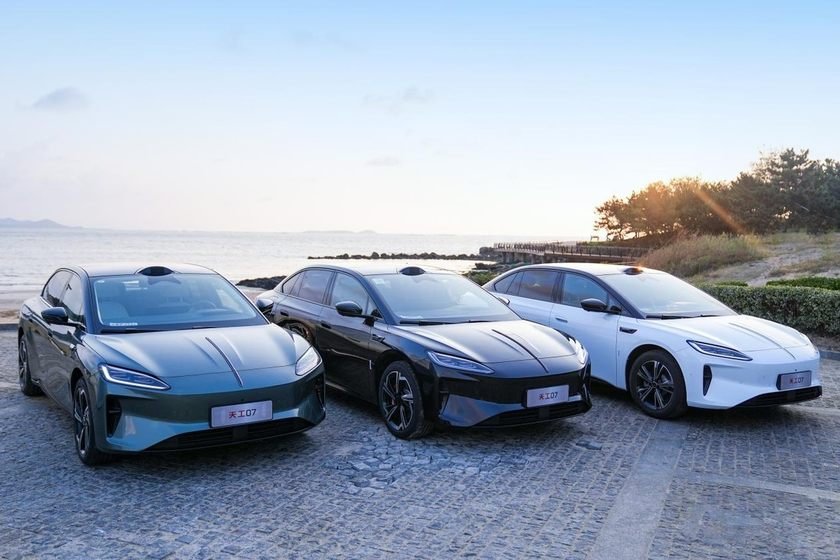
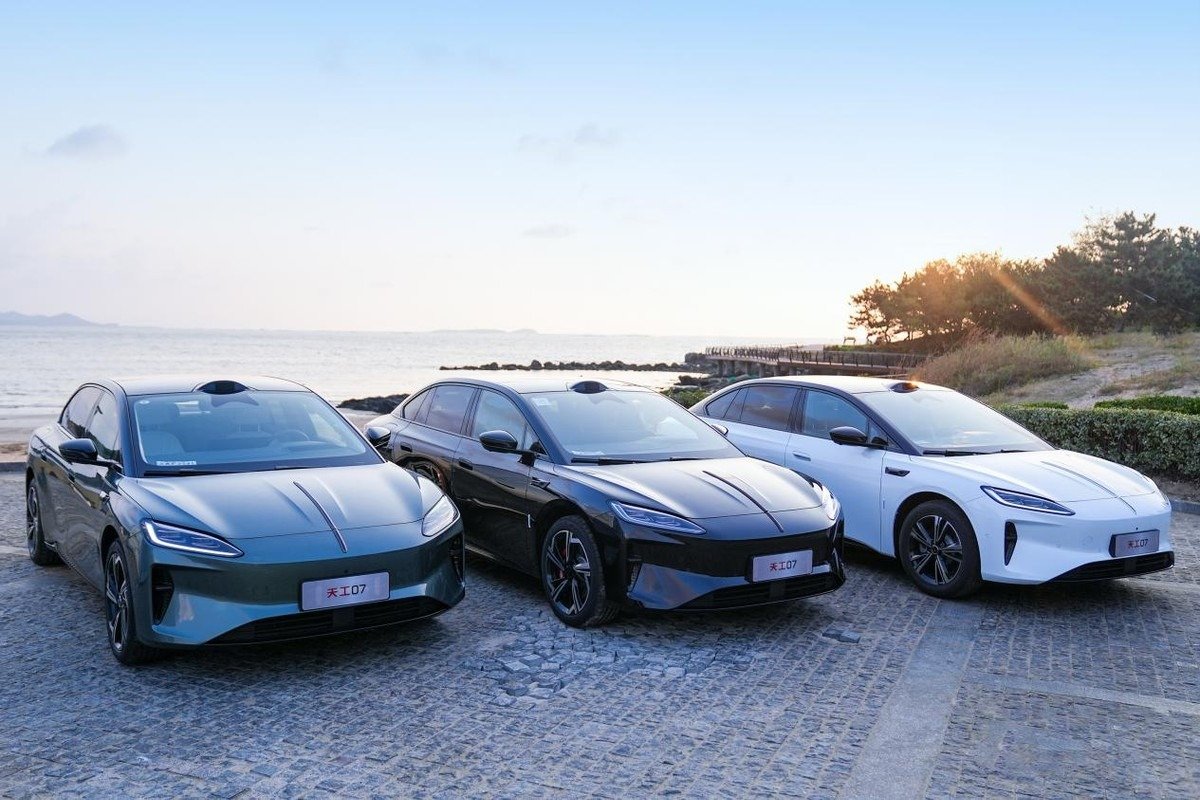
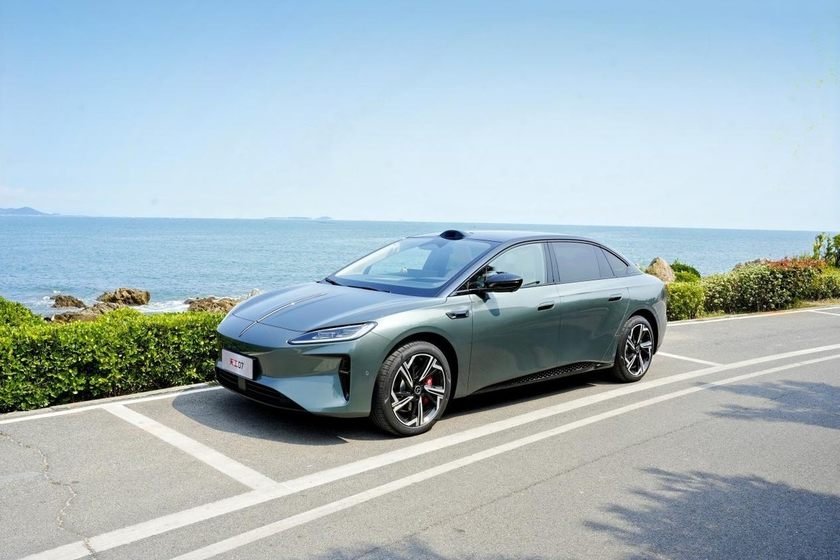
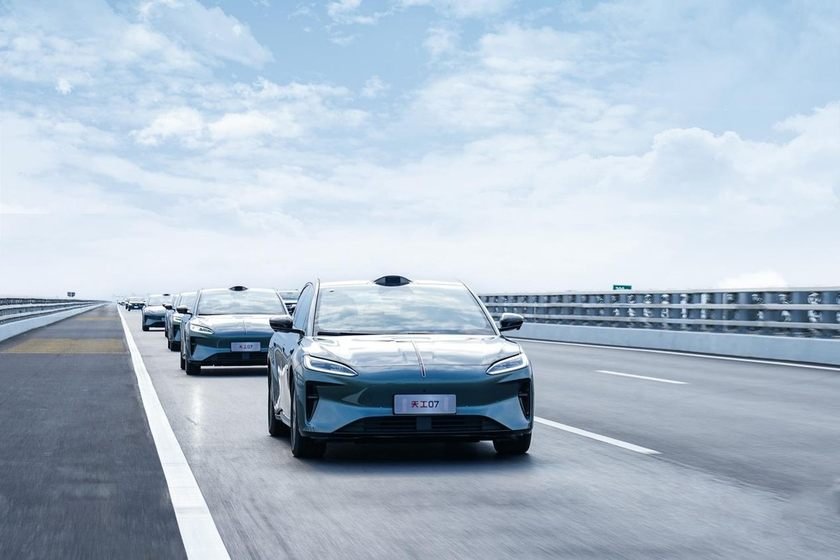
In terms of exterior, the Tiangong 07 continues the Hongqi family's "Oriental aesthetics centered design" language, with a closed front grille paired with star diamond headlights. The light cluster uses a painted laser engraving process to create a crystal texture, and when the tail lights light up, they present a starry galaxy effect. The shoulder line on the side of the body extends from the front headlights all the way to the rear, with semi-hidden door handles paired with dual five-spoke wheels, and the overall lines are stretched and imposing. Frankly speaking, Hongqi's design skills have never been a concern. What is rare this time is that it has achieved a balance between "good-looking" and "timeless."
The Tiangong 07 is Hongqi's first model equipped with lidar, and right away it features a 384-line dynamically variable-focus lidar, with a maximum detection range of 600 meters. Combined with the Sinan Smart Driving 5.0 lidar plus vision front fusion solution, it supports a full set of advanced functions such as urban navigation, highway navigation, cross-floor memory parking, and parking spot to parking spot.
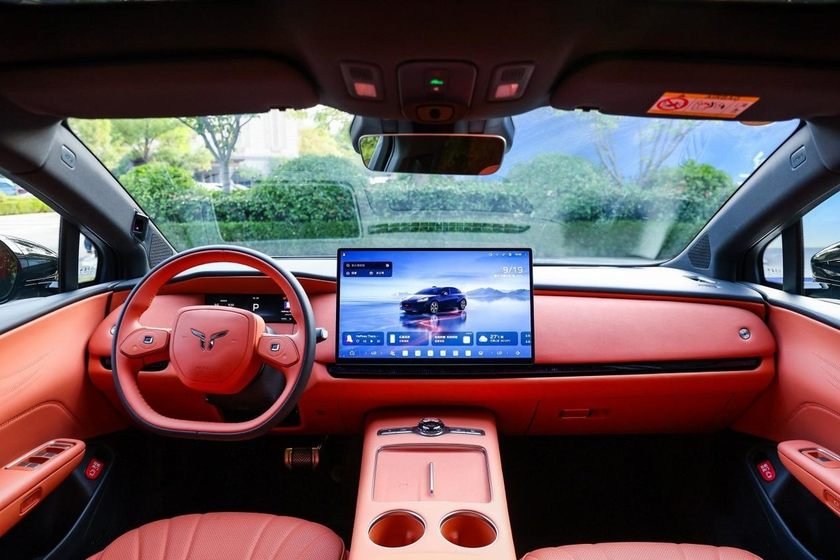
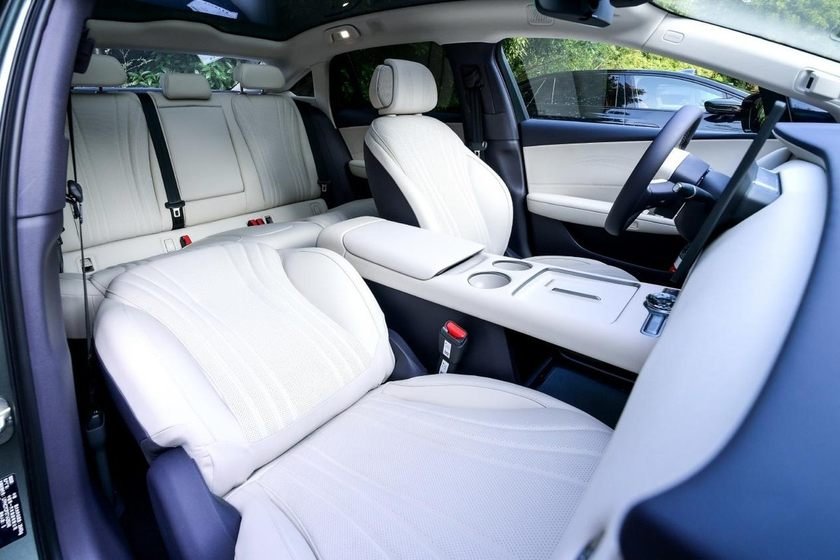
Dynamic variable focus means it can both "see far" and "see wide." In scenarios such as rain and fog or driving in and out of tunnels at night, where cameras are prone to failure, its judgment will be more confident. In terms of the cabin, it debuts the Qualcomm 8397 chip, with computing power 14 times that of the current mainstream 8295. Together with the Lingxi Cabin 6.0, voice response is under 200 milliseconds, and it also supports recognition of 9 dialects.
Car Review Agency: Hongqi needs the Tiangong 07, but the Tiangong 07 needs more. The Tiangong 07's product strength has no obvious shortcomings: class-leading size, fully loaded configuration, and a ruthless price. But the reality before it is also very clear—in the 200,000 yuan class pure electric sedan market, the Xiaomi SU7 attracts fans through its ecosystem closed loop, the XPeng P7i holds its ground through its smart driving reputation, and the BYD Han sells in volume through brand inertia. Hongqi's brand recognition was a bonus in the fuel vehicle era, but on the new energy track it needs to rebuild trust. The Tiangong 07 has given an answer sincere enough. Next, it depends on whether consumers are willing to give Hongqi a chance to be understood anew.


