From Selling Cars to Taking Root in Europe: Geely's Globalization Enters a New Stage of "Systemic Going Global"
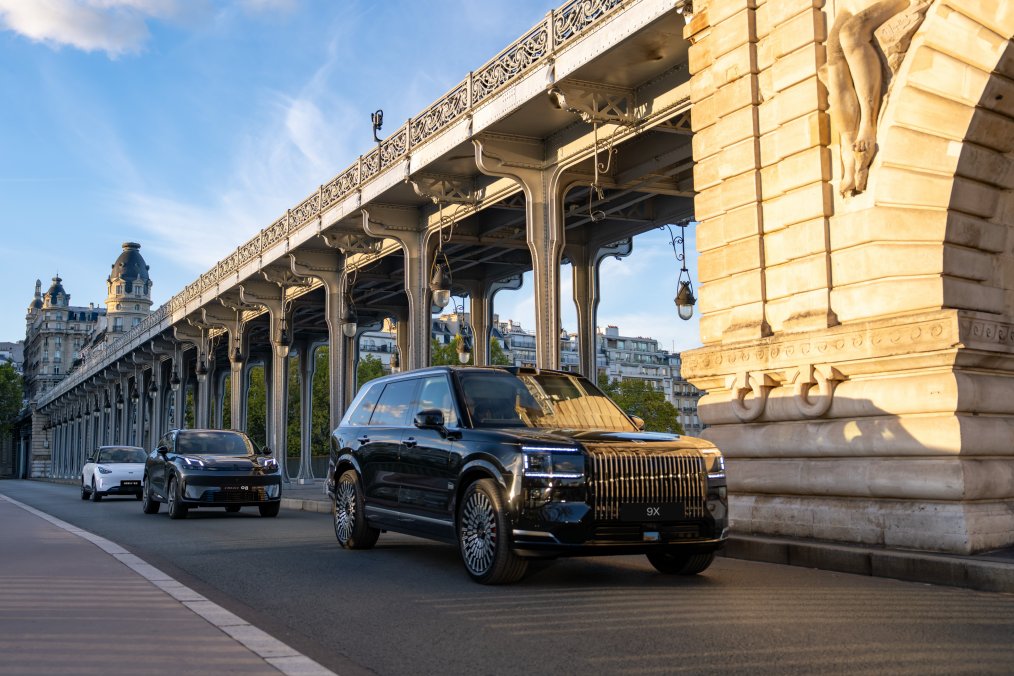
On October 12, Geely Automobile Group made its first appearance at the Paris Motor Show as a group, bringing its three major brands—Geely, Lynk & Co, and Zeekr—together in Paris. The Geely Monjaro EM-i and Lynk & Co 07GT made their European debuts, while models such as the Galaxy Battleship 700, Zeekr 9X, and the all-new Zeekr 7X made a high-profile appearance. From Geely, aimed at the mainstream market, to Lynk & Co, positioned in the high-end market, and further to Zeekr, breaking into the luxury market, behind the appearance of these three brands together, what Geely is showcasing is no longer just a product matrix, but a globalization system that has gradually taken shape after nearly two decades of operating in Europe.
As Chinese automakers going global move from pure sales competition into a contest of localized operations, brand premium, and industrial synergy capabilities, the European market is becoming an important window for observing the “quality” of Chinese automakers’ globalization.
From a capital market perspective, this is also an important entry point for understanding Geely’s next-stage growth logic: as competition in the domestic auto market continues to intensify, overseas business is gradually shifting from a supplementary source of incremental growth to an important variable affecting scale, profitability, and long-term valuation.
Europe is not just a car-selling market, but also a “capability foundation” for globalization
Since the beginning of this year, Geely’s overseas business growth has clearly accelerated.
In the first nine months of 2026, Geely Automobile Group’s cumulative sales exceeded 2.23 million units, a record high for the same period in history, of which overseas exports reached 797,670 units, a year-on-year increase of 169%; monthly overseas exports have exceeded 100,000 units for four consecutive months, reaching 106,685 units in September, a year-on-year increase of 162%. The group also raised its full-year export target from 640,000 units to 920,000 units, beginning to approach the million-unit scale.
At the same time, the European market has also begun to release clearer signals of scale growth. In September 2026, the combined monthly sales of the three major brands under Geely Automobile Group in the EU exceeded 10,000 units for the first time, demonstrating the group’s momentum of sustained growth in the European market.
But compared with export figures, the more noteworthy change is Geely’s globalization logic itself.
According to Geely’s plan, in the next 2-3 years its overseas sales target will challenge 2 million units, of which the combined target for Pan-Europe and Eastern Europe will reach 900,000 units. In other words, Europe is not an ordinary region in Geely’s globalization map, but a strategic market carrying nearly half of its overseas incremental target.
This also determines that Geely cannot rely only on complete vehicle exports in Europe.
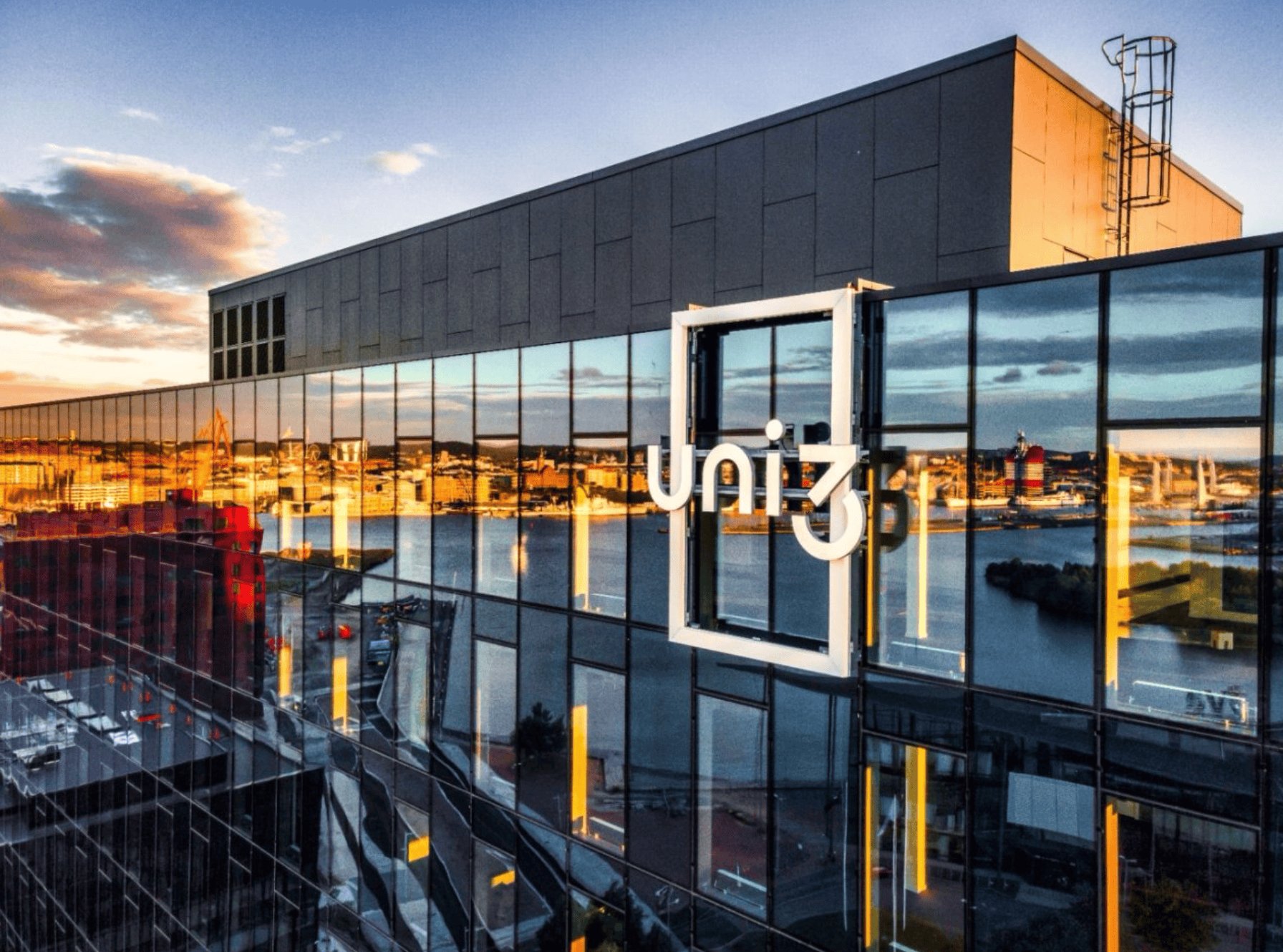
After nearly two decades of layout, Geely has gradually moved R&D, design, channels, and even manufacturing collaboration into Europe. At present, Geely Automobile Group has established a localized system in Europe covering R&D and design, with three major R&D centers and three major design centers; Geely Technology Europe has integrated the R&D operations in Gothenburg, Sweden, and Frankfurt, Germany, with one of its goals being to compress the launch time gap between Chinese and overseas models to within 6 months; the Gothenburg design and R&D system serves Zeekr and Lynk & Co, while the Italian design center serves the Geely brand. Europe is therefore both a sales market and an important part of Geely’s global R&D system.
For an industry like automobiles, with strong supply chains and strong economies of scale, this change means that the overseas operating model is shifting from “selling products made in China” to exporting R&D, products, channels, and manufacturing capabilities together.
“Industrial symbiosis” becomes a path for Geely to reduce the cost of globalization
Another threshold in the European market comes from tariffs, investment costs, and local industrial policies.
If Chinese automakers rely entirely on building their own factories and channels, they need to face huge upfront capital expenditures and long investment payback periods. The path Geely is trying is closer to cooperation using existing industrial resources.
Under the “One Geely” system, Geely’s cooperation with automakers such as Volvo, Renault, and Ford has already covered multiple links including R&D, manufacturing, powertrains, and channels. This kind of “industrial symbiotic” asset-light cooperation—not simply duplicating new capacity, but improving localization efficiency through existing industrial resources.
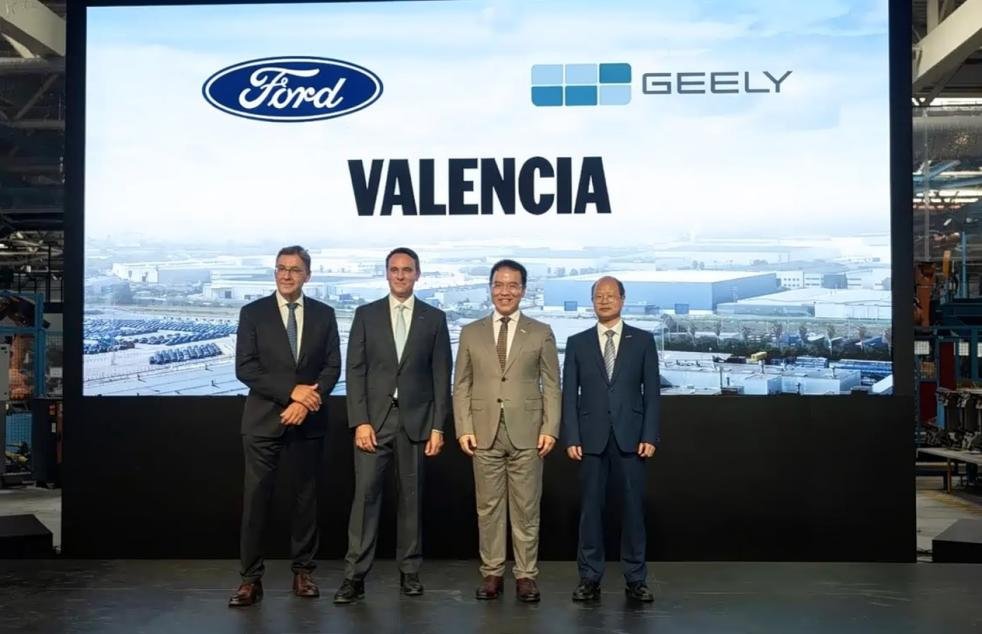
The Ford-Geely Europe cooperation announced this year is a typical case. The two sides plan to establish a manufacturing joint venture around Valencia, Spain, sharing capacity while apportioning fixed costs and development costs. Under the currently disclosed plan, Ford is proposed to hold 66% and Geely Automobile 34%.
For Geely, this cooperation fills in a key piece of the puzzle for local manufacturing in a core Western European market, enabling a more complete closed loop among the sales network, local production, and regional delivery; for Valencia, the introduction of additional models and capacity also helps improve the utilization efficiency of existing plants and provides longer-term stability for the local automotive industry chain and employment. The two sides are not simply transferring capacity, but by sharing existing industrial infrastructure, forming a community of interests closer to “produced in Europe, sold in Europe.”
Similar changes are also taking place on the channel side. Starting in 2027, Volvo Cars will become Lynk & Co’s exclusive dealer in Europe. Lynk & Co can directly leverage Volvo’s already mature commercial infrastructure, retail network, and service system to further expand the market, while maintaining its own independent brand positioning and user experience.
From manufacturing to channels, the common logic of such cooperation is to use Europe’s existing industrial resources to achieve localization, rather than replicating a heavy-asset system anew in every market. For Geely, this not only helps reduce the marginal investment in globalization, but also enables capacity, channels, and the service system to form synergies more quickly.
From “product going global” to “system going global”
If localization determines whether Geely can operate in Europe for the long term, then brand upgrading determines how much value the overseas business can ultimately contribute.
At this Paris Motor Show, Geely, Lynk & Co, and Zeekr respectively cover the mainstream, high-end, and luxury markets. The differentiated positioning of the three brands has already begun to translate into actual market coverage. The Geely brand has now entered 27 European countries and has more than 450 sales outlets. With the successive launches of products such as Geely E5, Starray EM-i, and E2, its product matrix in the mainstream market continues to improve; Lynk & Co’s business covers 25 European countries and more than 140 sales outlets, and starting in 2027 it will further connect to Volvo’s mature European retail and service system; Zeekr has already entered 22 European countries, with European deliveries in 2026 increasing by 200% year-on-year.
The three share R&D, supply chains, and global resources in the back end while maintaining independent brand positioning in the front end, enabling Geely to cover the mainstream, high-end, and luxury price bands at the same time. Compared with a single brand “going out,” this kind of multi-brand synergy is closer to a complete global auto group conducting systematized operations in Europe.
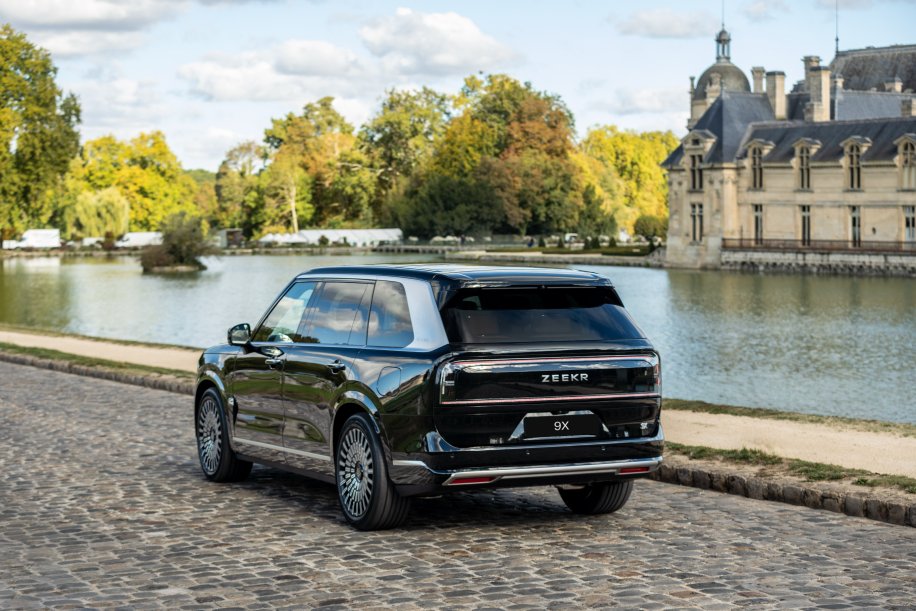
This layout can also be seen from the products unveiled this time. The Geely Monjaro EM-i is Geely’s first model chosen for a debut in an overseas market; the Galaxy Battleship 700 landed in Paris immediately after its global release on October 10; and the Zeekr 9X has already opened reservations in Europe and is scheduled to begin deliveries in January 2027, with a starting price in the German market reaching 119,500 euros, making the Zeekr 9X one of the highest-priced mass-production models from a Chinese brand currently on the European market.
While the position of overseas markets in Geely’s product system continues to move forward, the product price band is also breaking upward in tandem.
At the same time, technology has also begun to become new export content. In March this year, Geely’s Qianli Haohan G-ASD obtained UN R171 certification, becoming the first Chinese automaker to obtain this certification, laying the foundation for assisted driving technology that complies with European UNECE regulatory requirements to enter the local market. This means that what Geely exports in Europe is no longer just complete vehicle products; intelligent software and technical systems such as assisted driving have also begun to enter overseas markets simultaneously. Going global is further extending from product exports to the systematic export of intelligent software, system capabilities, and brand soft power.
For Geely, the Paris Motor Show is therefore not just a concentrated product display.
Nearly two decades of European layout have allowed Geely to gradually form local capabilities ranging from R&D and design to products, channels, and industrial cooperation; whether this system can then translate into sustained overseas sales growth, higher brand premium, and more stable profitability is something that needs to be verified by the market.
As going global enters “deep waters,” what determines the upper limit of an automaker’s globalization may no longer be who sells more cars, but who can truly become part of the local automotive industry and achieve higher-quality going global.


